Decision 01
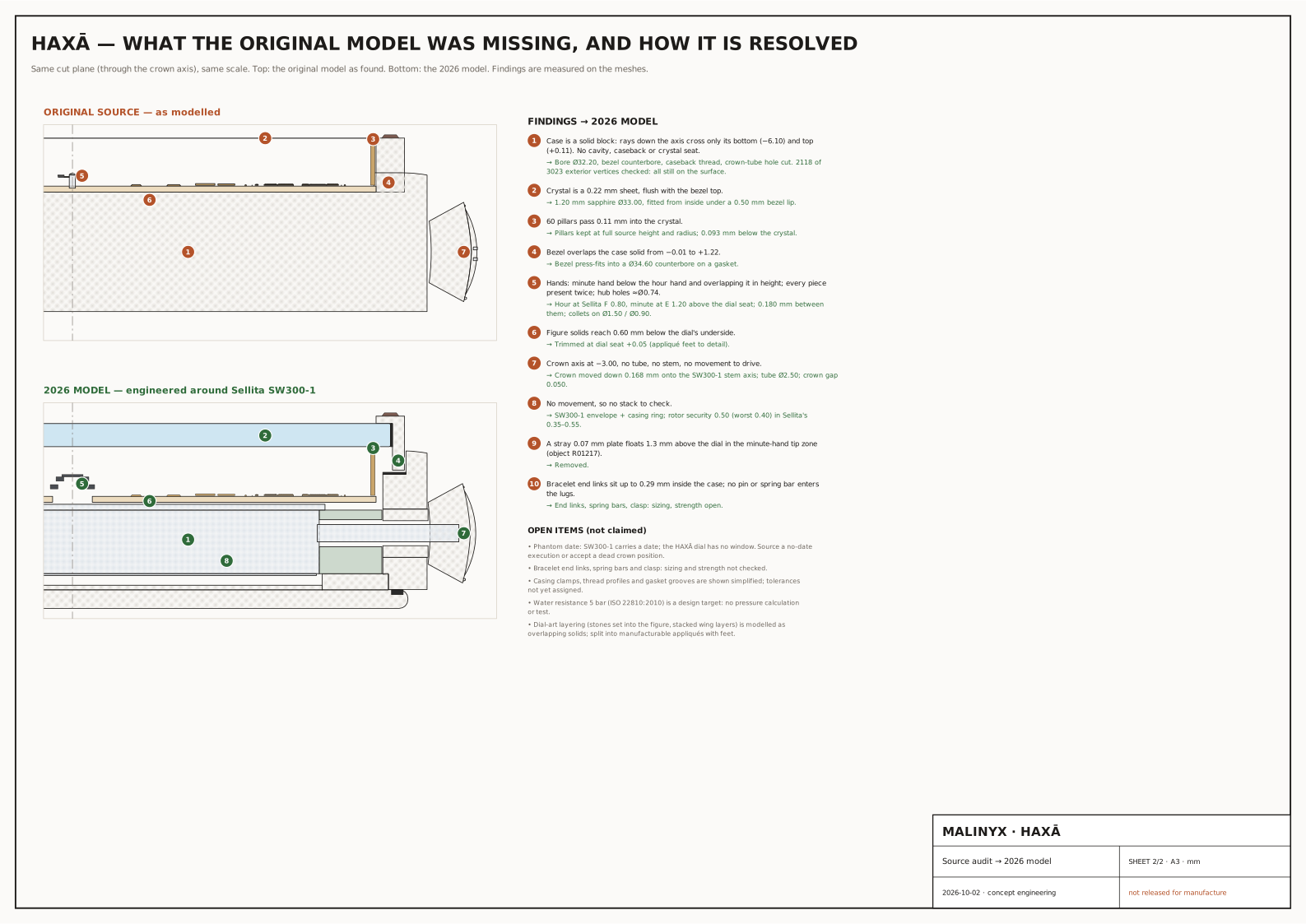
Keep every visible surface
2,118 case and 771 bezel vertices lie on the new surfaces. Dial and movement sink 1.668 mm instead of shaving the 60 pillars.
Measured on model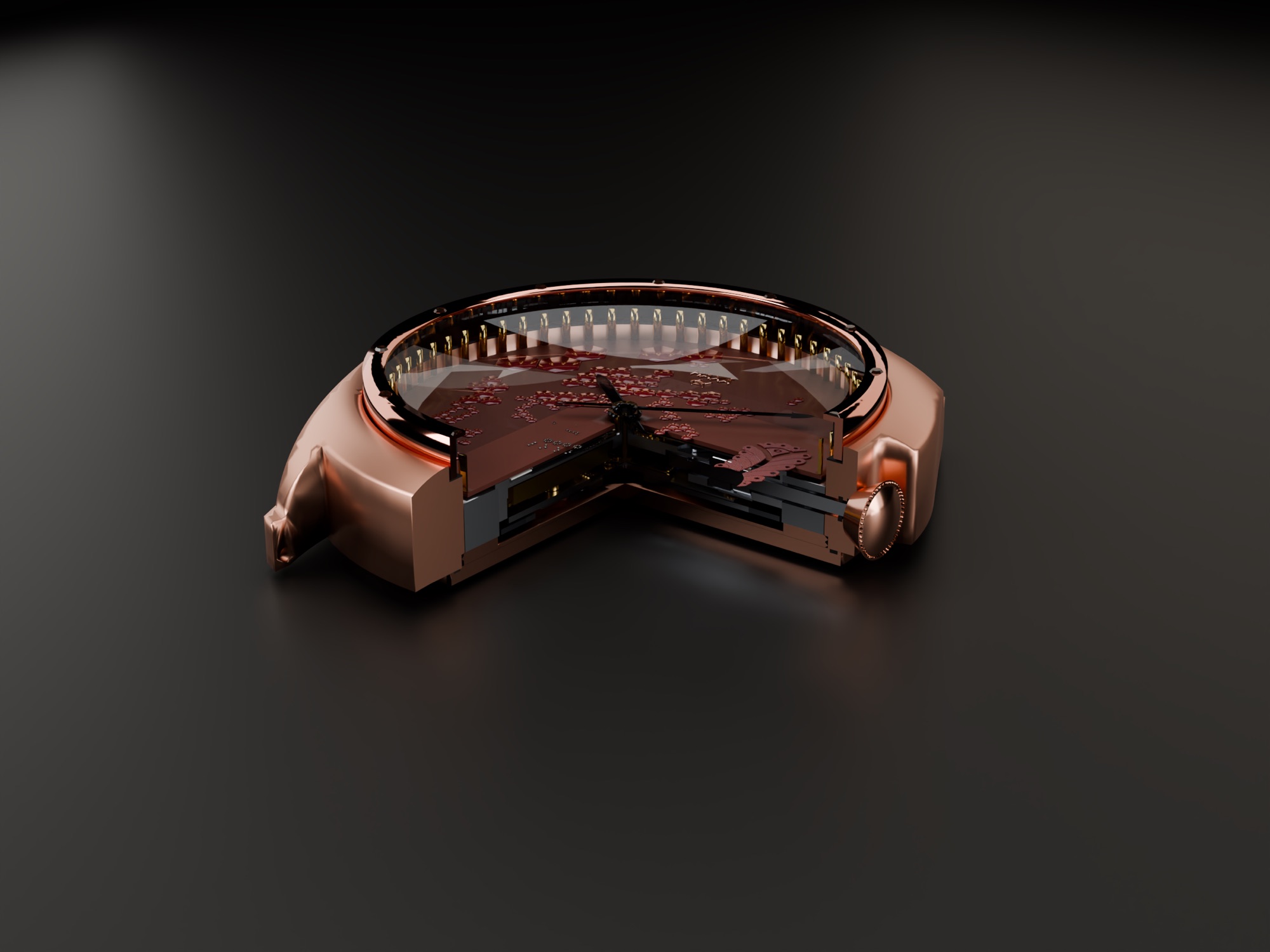
Product · Watch
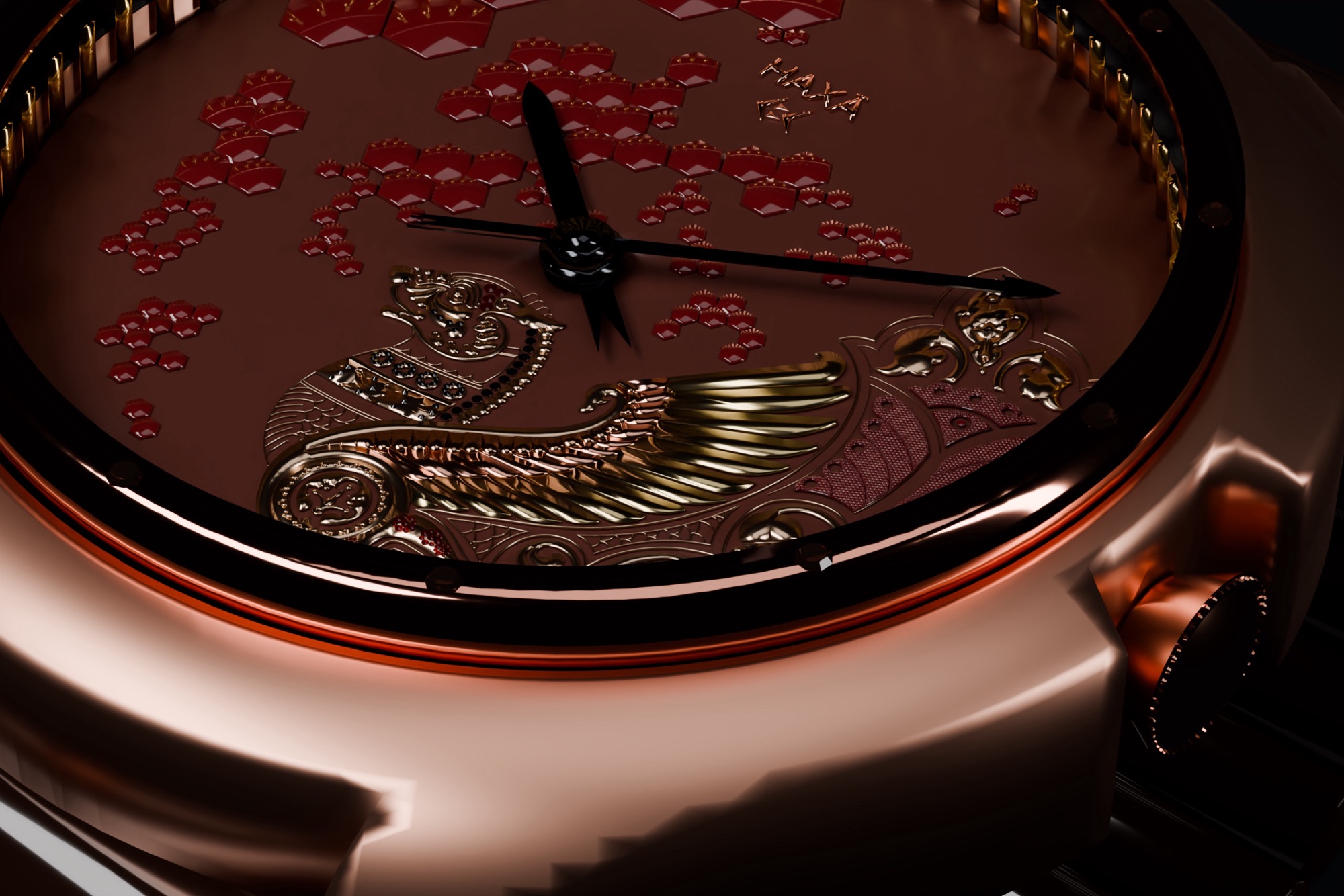
My original concept watch, re-engineered around a Swiss automatic calibre: the surfaces I drew, now with a movement, a sapphire crystal and a crown on the stem axis — 182 parts, screened for interference on the model.
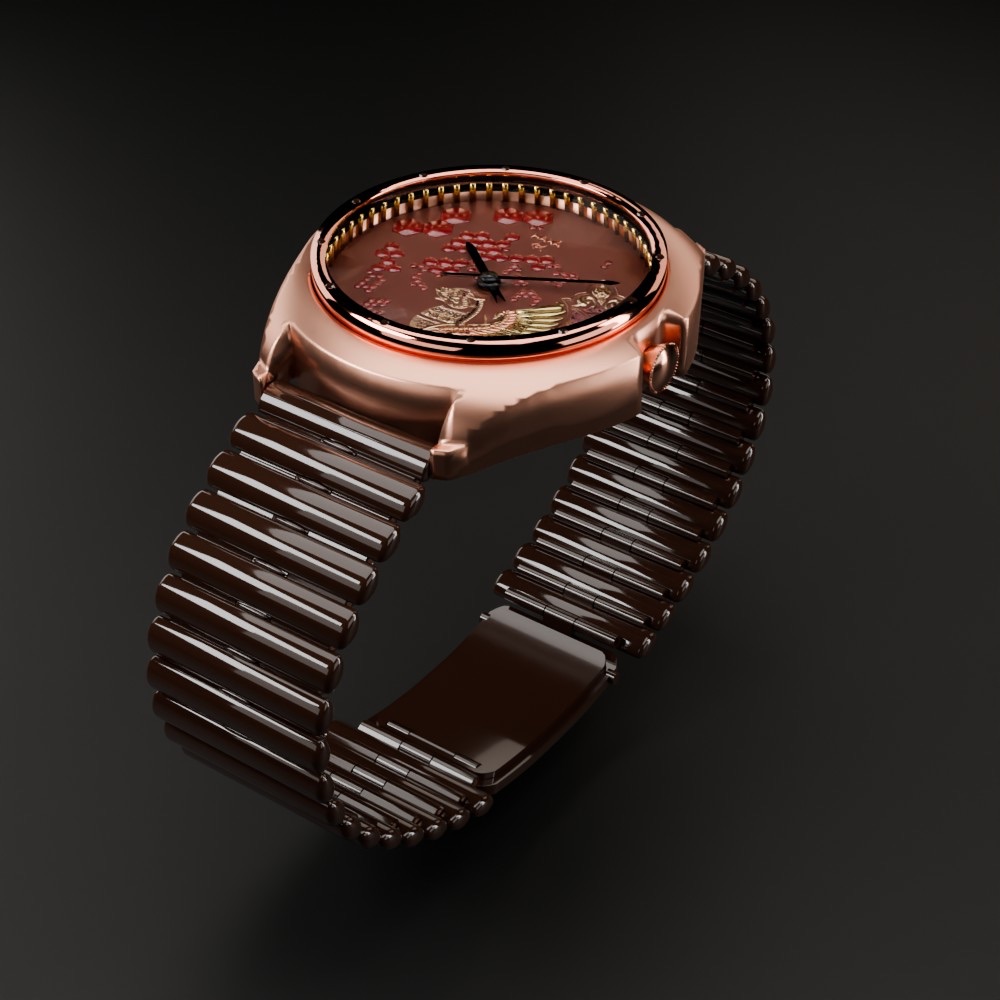
Satin rose-gold case, brown lacquer dial, burgundy enamel, champagne figure.
HAXĀ began as a KeyShot centrepiece. As modelled, the case was solid, the crystal was a 0.22 mm sheet, the hands overlapped in height and nothing sat inside. The 2026 model had to keep every visible surface and make room for real watchmaking.
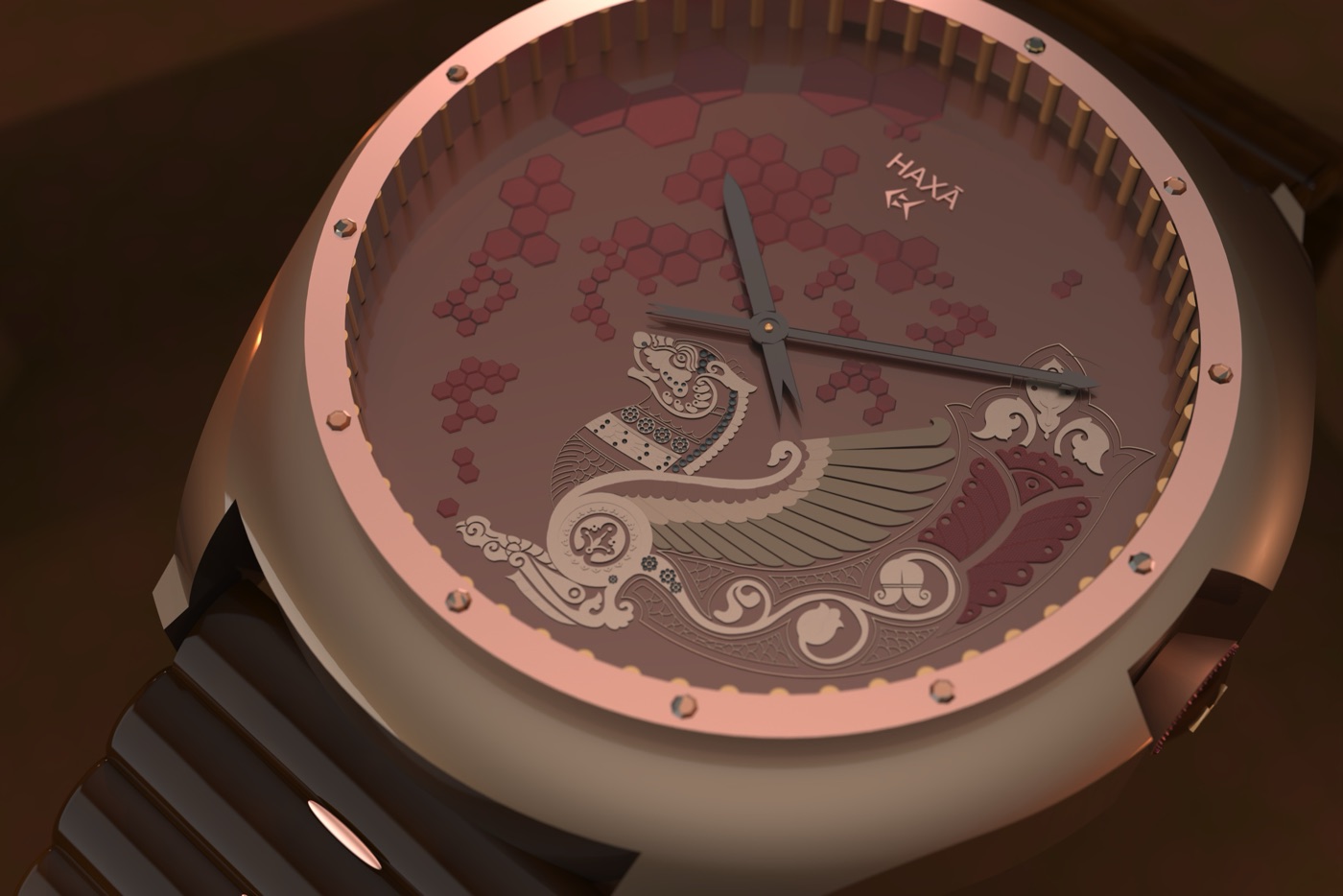
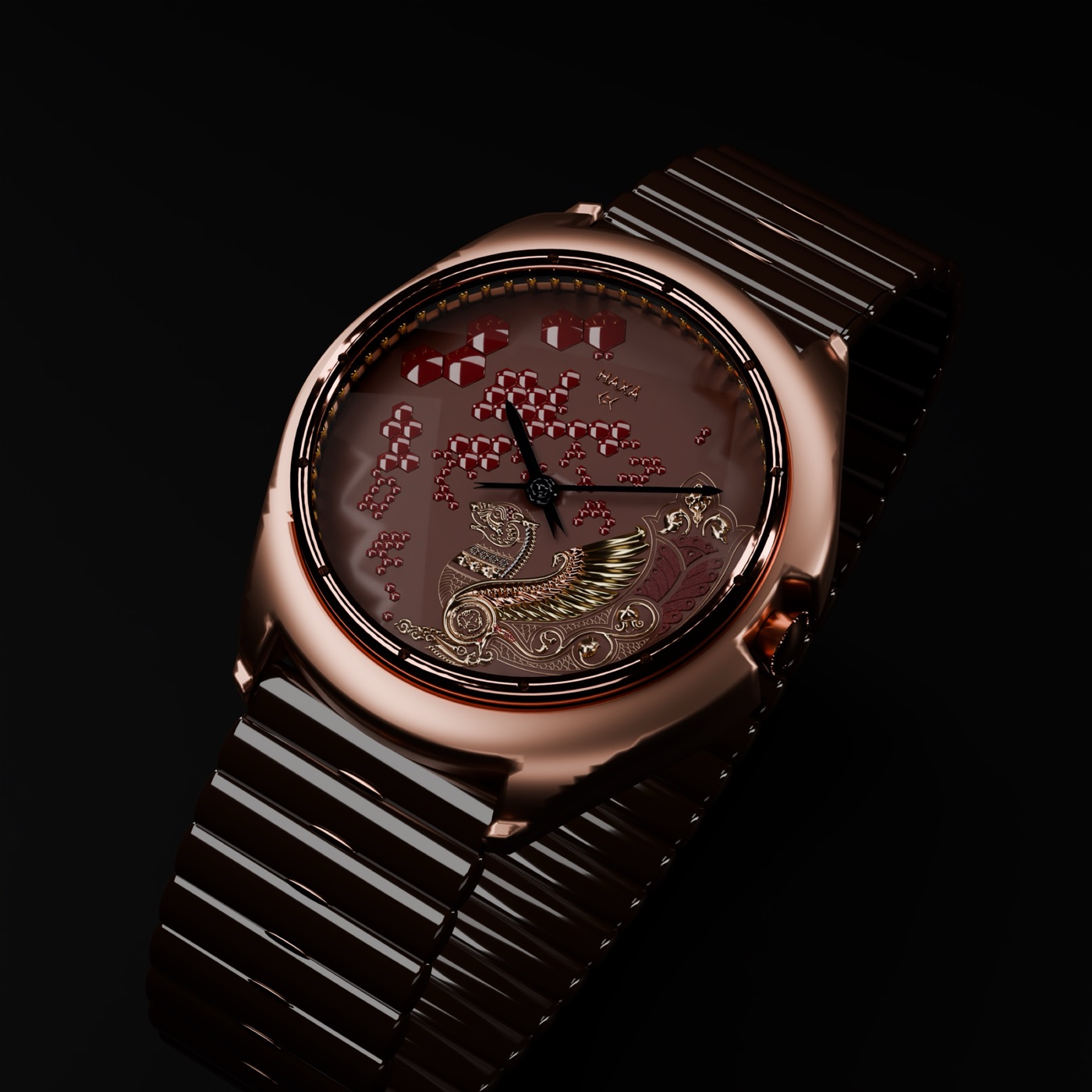
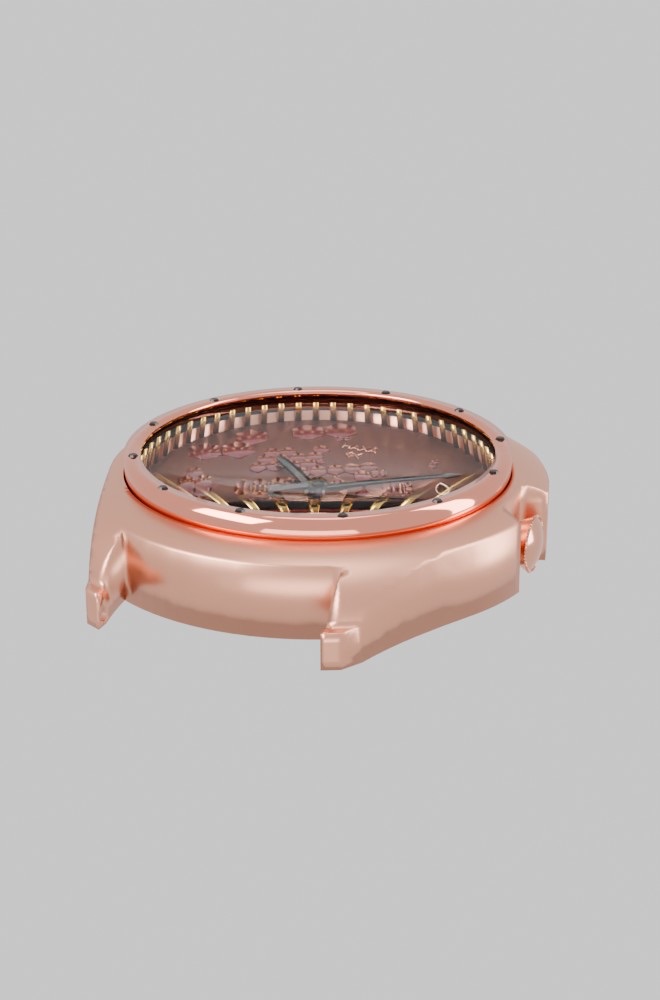
Original render and 2026 model — different cameras and lighting, so compare the geometry, not the mood.
My own design: the original and its 2026 re-engineering.
Decision 01
2,118 case and 771 bezel vertices lie on the new surfaces. Dial and movement sink 1.668 mm instead of shaving the 60 pillars.
Measured on modelDecision 02
A Sellita SW300-1 automatic, modelled inside its published envelope: 71 parts. Internal geometry is representative where the data sheet stops.
Supplier spec · Sellita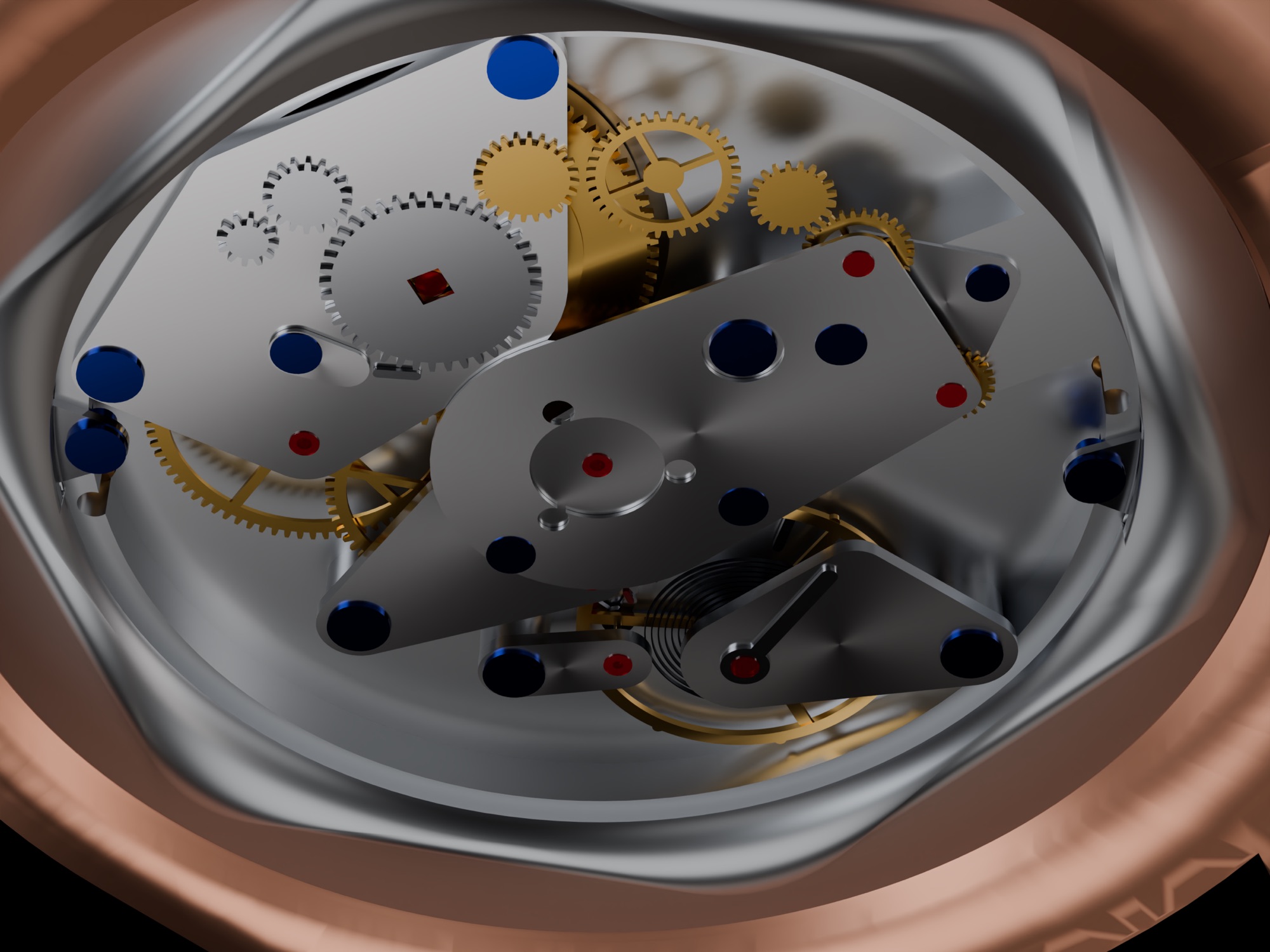
Decision 03
A 1.20 mm sapphire is fitted from inside under a 0.50 mm bezel lip; the caseback steps 0.97 mm below the original case.
Measured on model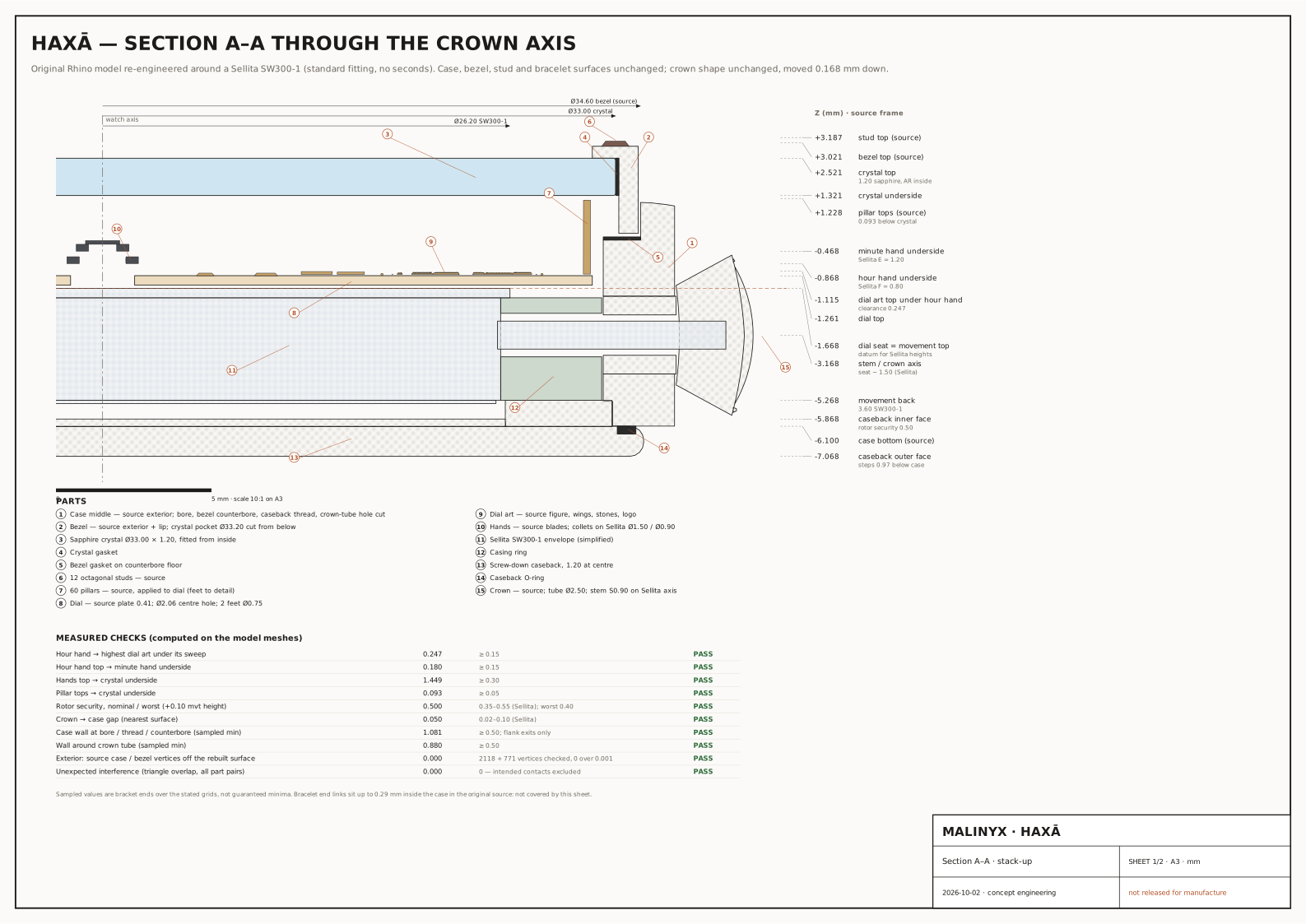
Decision 04
The crown moves down 0.168 mm onto the calibre’s stem axis; the hands are regrouped and restacked on Sellita heights.
Measured on model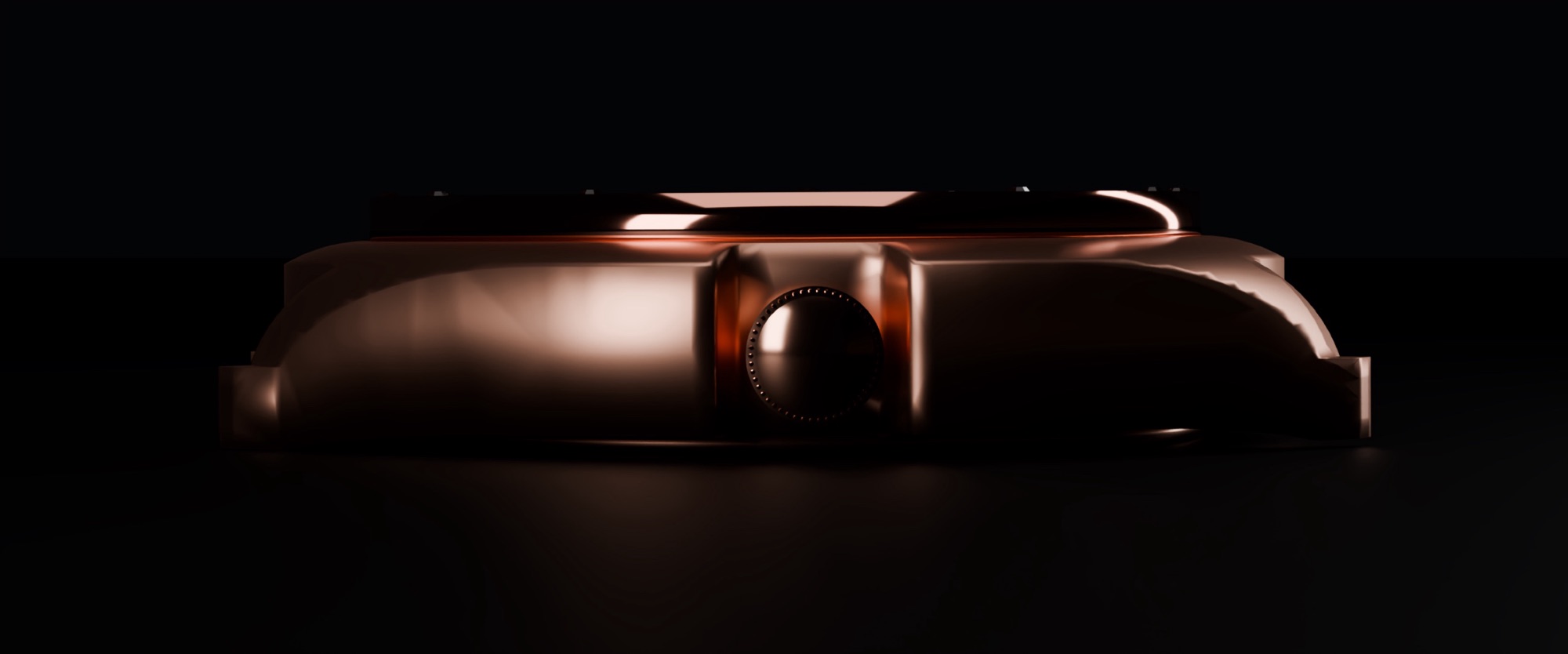
CAD-developed architecture: 182 parts — 71 movement, 75 bracelet, 36 case, dial and hands — and an interference screen that found no unintended contact above 0.01 mm. Movement internals are representative, inside Sellita’s published envelope.
| Item | Value | Level |
|---|---|---|
| Calibre | Sellita SW300-1 automatic · 3.60 mm | Supplier spec · Sellita |
| Thickness | 10.25 mm, caseback to studs | Measured on model |
| Crystal | Sapphire 1.20 mm under a 0.50 mm lip | Designed |
| Parts | 182 · interference screen: 0 above threshold | Screened on model |
| Water resistance | 5 bar target · not tested | Specified intent |
HAXĀ began as a portfolio centrepiece: a sculpted Persian winged figure on a hexagon field, rendered in KeyShot. It looked like a watch, but it was a solid case with a 0.22 mm sheet for a crystal and no movement inside.
In 2026 I re-engineered it around a real movement. The visible surfaces stay exactly as I drew them — 2,118 case and 771 bezel vertices lie on the new surfaces — and the inside is new: a Sellita SW300-1 automatic modelled to its published envelope, a 1.20 mm sapphire under a 0.50 mm bezel lip, a crown on the stem axis, and hands restacked on the calibre's heights.
HAXĀ · Take it apart · scroll
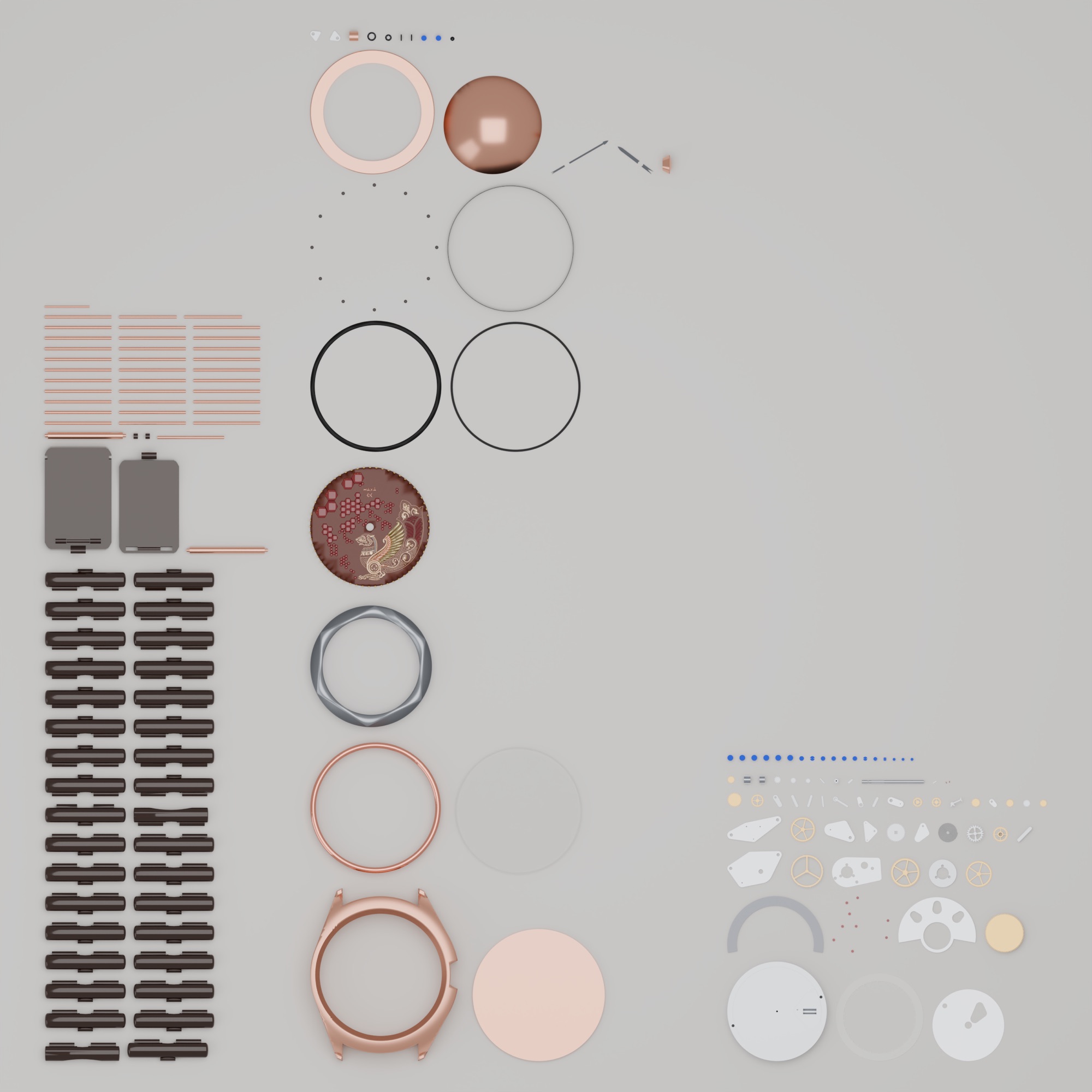
AssembledHAXĀ — 10.25 mm from caseback to studs.
LiftSapphire, bezel and the dial's 60-pillar colonnade come away.
CalibreA Sellita SW300-1: 71 parts, modelled inside Sellita's published envelope.
Every part182 parts in all. The interference screen found none above 0.01 mm.
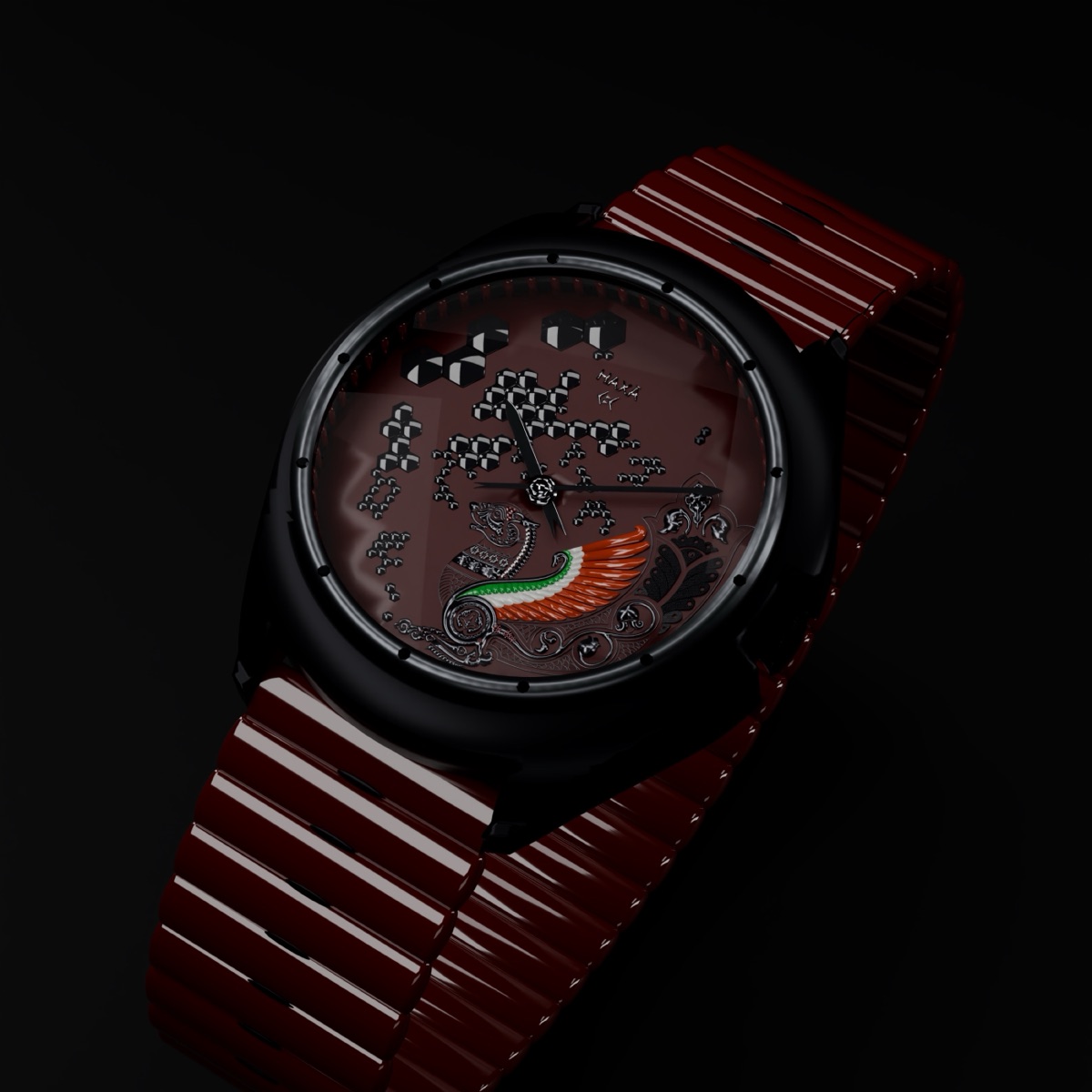
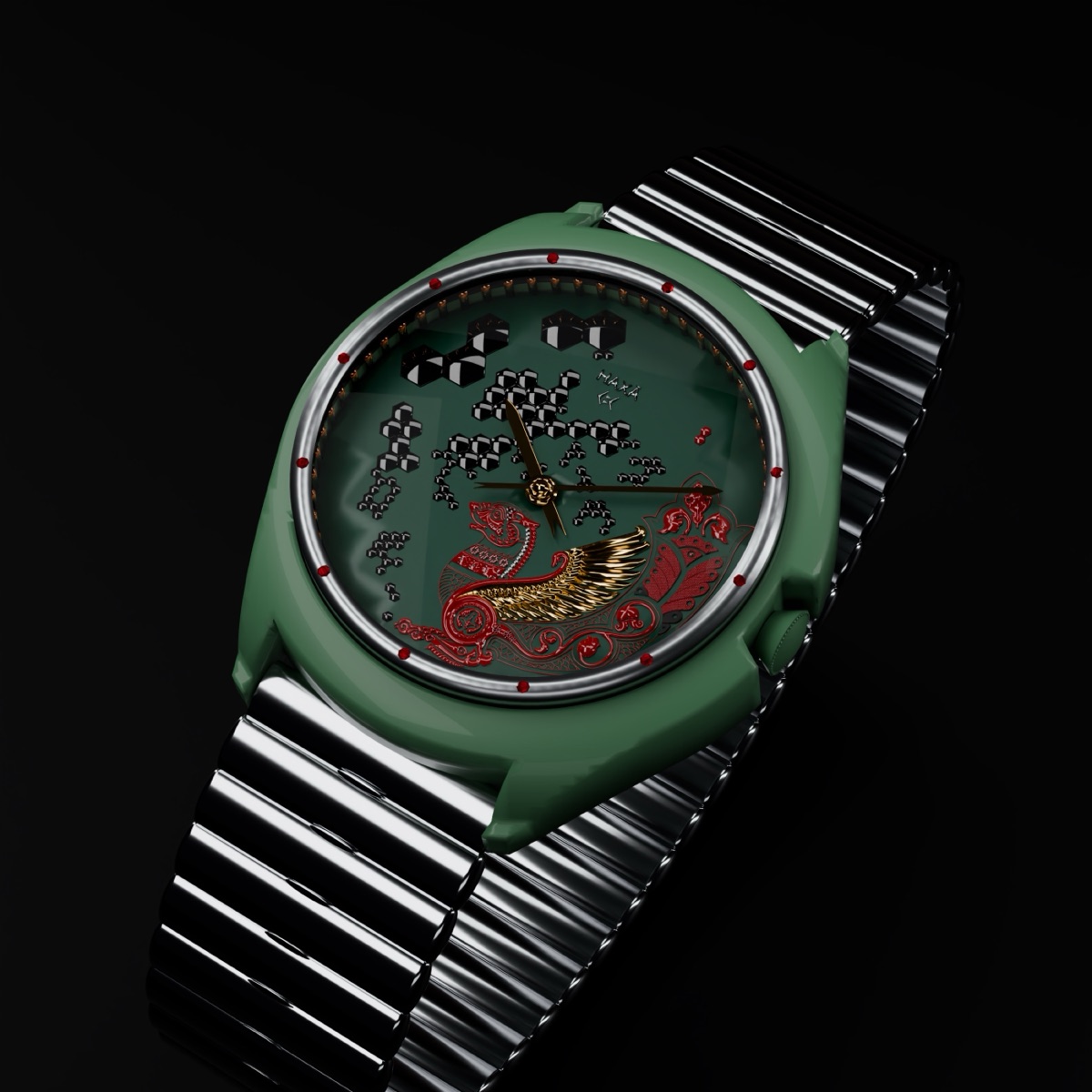
Three colourways on one engineering. Finishes are design intent — none is specified for manufacture.
Case and bracelet · Satin rose gold
Brown lacquer dial, burgundy enamel, champagne figure.
Case and bracelet · Black DLC
Oxblood lacquer dial, onyx hexagons, red-white-green enamel wing.
Case and bracelet · Matte green
Emerald lacquer dial, ruby studs, crimson enamel figure.
Next project · Packaging · Fragrance cartridge platform
Refillable fragrance atomizer with a non-rotating cartridge dock